
Published January 15, 2026
A child was sent home from the hospital with a prescription for sirolimus oral solution (1 mg/mL), a medicine used to prevent organ rejection after transplant. The doctor told the parents to give 0.1 mL (0.1 mg) by mouth once a day. At a routine follow-up visit, the doctor found that the child’s laboratory results showed that the level of sirolimus in their body was extremely high. The parents realized they had given 1 mL instead of 0.1 mL of medicine for each dose. They mixed up the 1 mL marking on the syringe with 0.1mL (Figure 1), so the child was given ten times the amount of medicine they should have received with each dose.
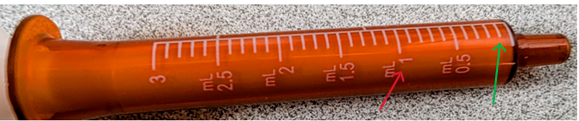
The sirolimus oral solution comes in a box with a 60 mL bottle, a syringe adapter, and 30 of the 3 mL syringes with caps. The syringes have lines that measure 0.1 mL, but only the half (0.5) and full (1) mL markings have numbers on them.
Here’s what you can do: Pharmacies should give appropriate size syringes—1 mL syringes for doses less than 1 mL, or 0.5 mL syringes for doses less than 0.5 mL. Smaller syringes help measure small doses more accurately. Doctors should make sure patients understand how to measure and give sirolimus. Pharmacies can use computer systems to remind staff to teach patients, even if the medicine is shipped. Pharmacists may mark the syringe to show exactly how much to give. They can also add a sticker to show where to fill the syringe. Pharmacists should ask parents to show how they will measure and give the medicine to make sure they understand. Give parents a simple guide to help them read syringe markings and measure the dose correctly.

.png)