Safe Product Spotlight: The FDA’s First New Sunscreen Ingredient Approval in Decades
Published on September 1, 2026
For the first time in many years, the US Food and Drug Administration (FDA) approved a new ingredient, bemotrizinol, to be used in sunscreen products in the United States. This ingredient has been used in other countries for a long time and helps protect your skin from both types of ultraviolet (UV) light (UVA and UVB rays). UVA rays reach deep into the skin and cause long-term damage like early wrinkles, while UVB rays hit the top layer of skin and cause sunburn; however, both can cause skin cancer which is why sunscreen use is so important. Because over-the-counter sunscreens are tested and controlled like medicine, it is important to follow the package directions, so you get the right protection without any unexpected side effects.
What Makes Bemotrizinol Different?
Bemotrizinol has been used safely for years in Europe, Asia, and Australia. Adding bemotrizinol to sunscreens helps address several issues found in older sunscreen products that are available in the United States:
Provides broad protection: A single ingredient protects your skin from both sunburn and long-term skin damage.
Stays on the skin: Bemotrizinol is unique in that it sits safely on top of your skin for a long time instead of soaking into the skin.
Lasts longer: It does not break down quickly indirect sunlight, so it keeps working while you are outdoors.
Gentle and clear: It does not leave behind a heavy white film, making it gentle on sensitive skin and great for all skin tones.
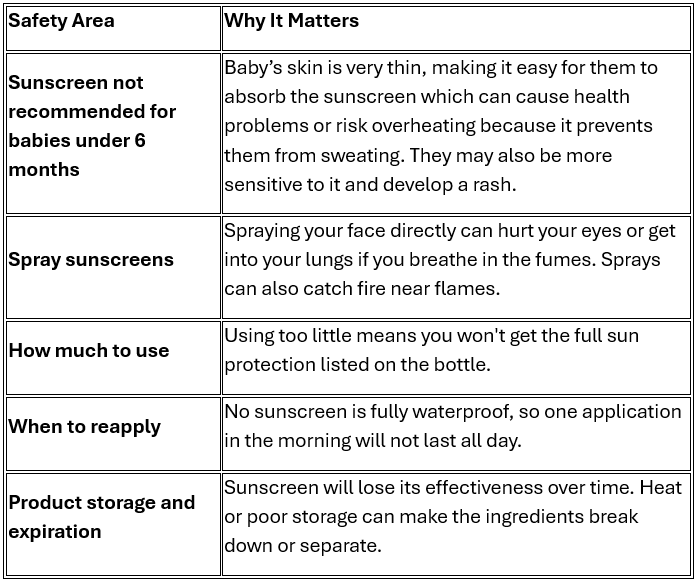
Even with better ingredients, sunscreen only works if you use it correctly. Here are some areas of concern when using sunscreen:
Here’s what you can do: Since the FDA just approved the use of bemotrizinol a few months ago, there are currently no sunscreen products available in the United States with this ingredient. Until products become available, continue to use sunscreen products, following these recommendations:
Keep babies in the shade with lightweight clothing and a hat instead of using sunscreen.
Spray the sunscreen into your hands first, then rub it onto your face. Keep sprays away from open flames.
Use a full handful of sunscreen lotion for your body and a dime-sized squirt for your face.
Put on more sunscreen every 2 hours, and right after swimming, sweating, or using a towel.
To make sunscreen products last longer, consider the following recommendations:
Avoid direct sun exposure for containers: Do not leave sunscreen bottles sitting in direct heat or inside a hot car. Keep containers wrapped in a towel or stored in the shade while outdoors.
Check expiration dates: Expired sunscreens lose their effectiveness and will not work as well in preventing sunburn. If a bottle does not have an expiration date, mark the purchase date on the label and discard it after a few years.
Inspect texture and smell: Discard any sunscreen that has changed color, separated into layers, or developed an unusual odor, even if it has not reached its expiration date.
Checklist for Safe Sunscreen Use
Check the active ingredients: Look for products that protect from both UVA and UVB rays and have high protective ratings (e.g., SPF 30, SPF 50). The sun protection factor (SPF) rating measures how well the sunscreen protects your skin from UVB rays. For example, sunscreen with SPF 30 blocks about 97% of UVB rays.
Apply early: Apply sunscreen to dry skin before stepping outdoors so it forms an effective protective layer.
Never rely solely on sunscreen: Combine the use of sunscreen with protective clothing such as wide-brimmed hats; long-sleeved, lightweight shirts; and UV-blocking sunglasses. In addition, stay in shaded areas during peak sun hours or use an umbrella or canopy.
Check your prescription medications: Certain medicines (including certain blood pressure drugs, antibiotics, acne treatments, and some chemotherapy medicines) increase skin sensitivity to sunlight. Ask your pharmacist if any of your medicines can cause you to be more sensitive to sun exposure.
FDA Campaign Aims to Protect Consumers from the Risks of Fake Online Pharmacies
The U.S. Food and Drug Administration has recently launched a national campaign to raise public awareness about the prevalence of fraudulent Internet pharmacies, which can be dangerous to patient health, and to help consumers make safe purchases.
Toddler Landed in the Hospital After Bottle Adapter Interfered with Child-Resistant Cap
A toddler was admitted to the hospital after taking an overdose of Quillivant XR (methylphenidate). This medicine is used to treat attention deficit hyperactivity disorder (ADHD). It had been prescribed for the toddler's older brother.
A woman went to pick up her son's prescription for Metadate CD (methylphenidate, extended release), which is used to treat attention-deficit/hyperactivity disorder (ADHD). The pharmacist had a hard time reading the prescription. He thought the doctor had prescribed methadone. This medicine is used for drug withdrawal, and also to lessen cancer pain.


.png)