
Published December 1, 2025
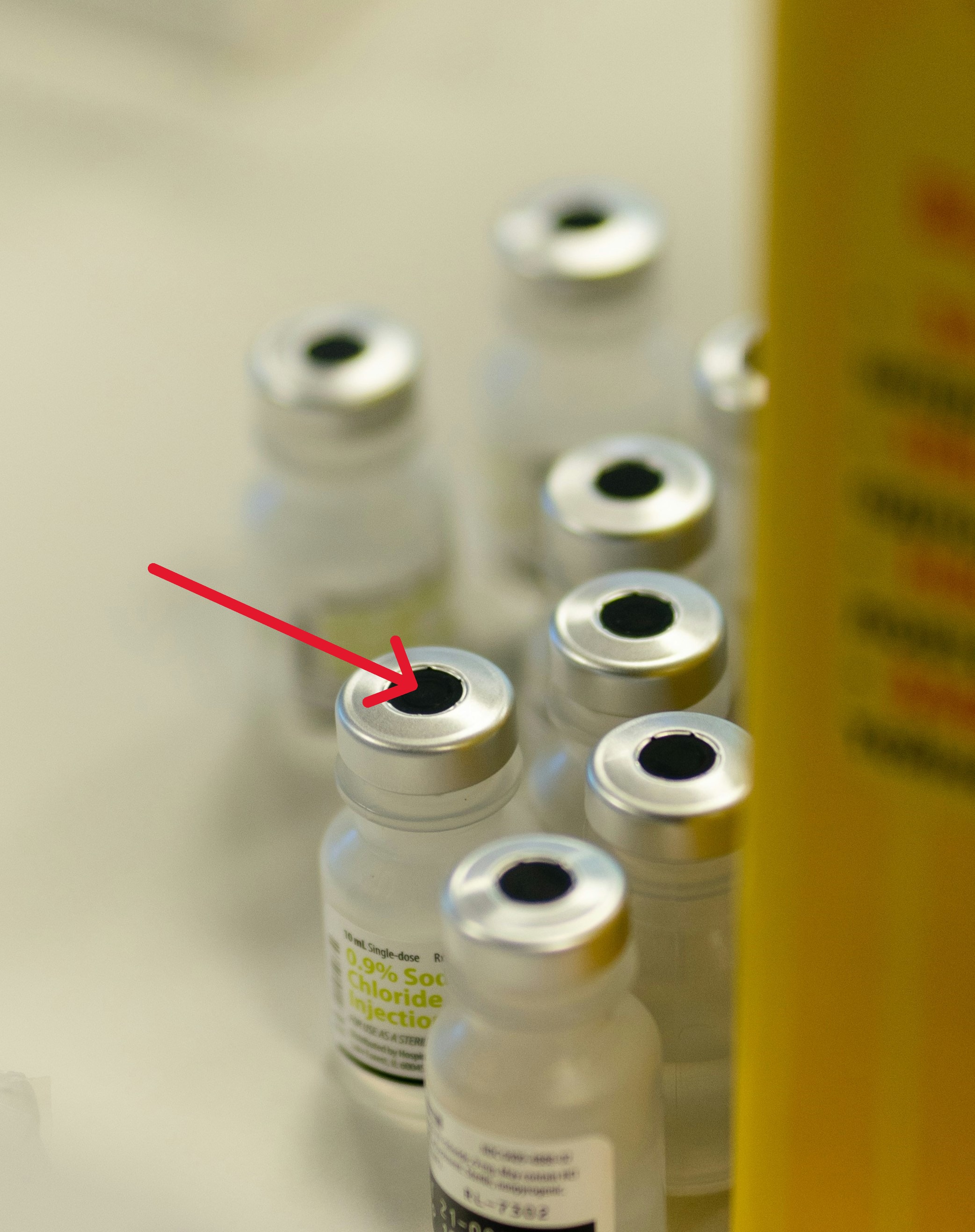
Medicine that needs to be injected may come in a vial. A syringe with a needle needs to be used to get the medicine out of the vial. The vial usually has a flip off cap and a rubber puncture area under the cap (Figure 1). To remove the dose of medicine from the vial, the needle is inserted into the rubber puncture area. Caution must be taken to ensure the medicine is not contaminated. Once the cap is removed, the rubber puncture area is wiped with an alcohol pad to sterilize the top prior to inserting the needle. Some medicine vials contain multiple doses of medicine so the vial can be used more than once. However, some medicines come in single-dose vials and should not be used more than once even if there is medicine remaining in the vial once a prescribed dose has been removed.
We received a report from a person who was prescribed one of the GLP-1 (glucagon-like peptide 1) injectable weight loss drugs, Zepbound (tirzepatide). The doctor prescribed a dose of 1.25 mg (0.25 mL) once weekly – which was a lower dose than normally prescribed. The dose usually prescribed is 2.5 mg (0.5 mL) once weekly, which matched the volume of medicine in the vial. When this person met with a physician’s assistant to go over how to draw up the dose and take the medicine, they were instructed to only use half of the medicine in the vial for each weekly injection. However, since the medicine was so expensive, they were also told to save the leftover volume of medicine in the vial to use for the next weekly dose. When the person discussed these instructions with their family member, who is a pharmacist, the pharmacist said not to reuse the vial of medicine. The medicine vial was labeled as a single-use vial and needed to be discarded even if there was medicine remaining.
Single-dose vials are approved for one time use only – one dose, for one person. If the vial is labeled by the manufacturer as a single-dose vial that means it does not contain ingredients (also known as an antimicrobial preservative) that protect it from bacteria growing in the vial. Therefore, even if there is medicine still in the vial, it should not be saved or used again. Bacteria can begin to grow within an hour of puncturing the vial, making a second dose of medicine unsafe. Using the vial for a second dose can result in an infection, even if it is used for the same person at a later time.
Here's what you can do: If you are prescribed a medicine that comes in a vial that you need to inject at home, make sure you understand how to use it. A doctor, nurse, physician’s assistant, or pharmacist should show you how to measure the dose and how to inject it. Ask them if it is a single- or multidose vial. When reviewing how to give the medicine, you should have the vial and syringe/needle with you so you can show them how you will measure and inject a dose. Make sure you read the entire label on the vial and look to see if it says single-dose or multidose vial. If it says single dose, then it should only be used one time, and anything left in the vial should be discarded. It is NOT okay to save it and use the extra medicine in the vial at a later time. No one should ever tell you to reuse a single-dose vial even if there is medicine left in the vial. The Centers for Disease Control and Prevention (CDC) have a tool available that explains the difference between single-dose and multidose vials. In addition, the Zepbound instructions for use, published by the company clearly state to discard the vial after it is used, even if there is medicine left.

.png)