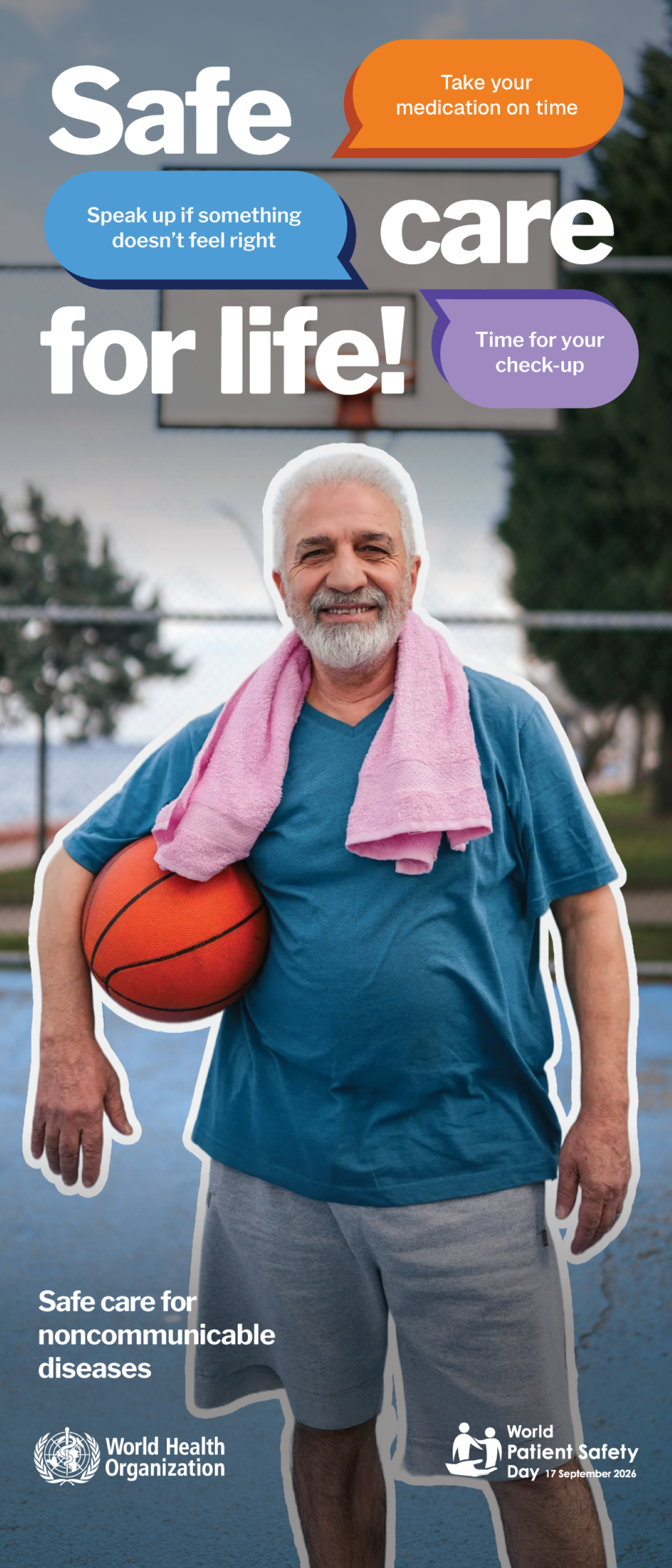
World Patient Safety Day (September 17, 2026): Safe Care for Life!
Every year the World Health Organization (WHO) observes World Patient Safety Day and encourages participation from healthcare organizations around the world. This special day falls on September 17 and encourages global unity in reducing patient harm worldwide. The focus of this year’s World Patient Safety Day is safe care for noncommunicable disease or “Safe Care for Life!”
Noncommunicable diseases are health conditions that cannot be spread from person to person. However, once a person is diagnosed with a noncommunicable disease, it will affect them for the rest of their life. For example, cardiovascular diseases (i.e., high blood pressure), cancer, diabetes, and breathing issues (i.e., asthma, chronic obstructive pulmonary disease [COPD]) are noncommunicable diseases. These health conditions can affect all people, of all ages, which makes it a global concern.
There are four objectives for this year’s World Patient Safety Day:
Raiseglobal awareness: Help people learn about safety problems that can happen when caring for people with diseases like diabetes, cancer, heart disease, or lung disease. This includes learning about the disease itself, access to care, and treatment options.
Promote engagement: Help people with long-term diseases and their communities take part in making care safer. They can help find safety problems and work with doctors, healthcare leaders, and government leaders to fix them.
Encourage leaders: Encourage leaders and other decision-makers to include patient safety in laws, policies, plans, and programs for long-term diseases. This means making healthcare systems stronger so patients can get safer care close to home.
Support healthcare workers: Make healthcare safer by finding ways to identify health problems sooner, using medicines safely, and helping patients take part in their care.
The WHO has recommendations for patients aspart of the World Patient Safety Day 2026 campaign.
Stay informed. Stay engaged. Stay safe.
Take steps to stay healthy. Learn what can raise your risk for long-term diseases. Get recommended checkups and screenings. Ask for help early if you notice warning signs.
Know your health condition and risks. Learn about your diagnosis, tests, and treatments. Know what symptoms to watch for that may be a sign of a problem. Follow healthcare instructions, including checking your medicines to help stay safe.
Speak up about your care. Be an active member of your healthcare team. Ask questions, repeat back what you heard, and tell someone if something does not seem safe.
Keep your health information with you. Keep a current list of your symptoms, test results, medicines, and appointments. This is important when you travel or are away from home. You can use patient portals, reminders, or trusted health apps to help track this information.
Use caution when your care changes. Pay close attention when you move from one doctor, clinic, hospital, or care setting to another. Make sure you know your medicines, follow-up visits, and who to call if you feel worse. Follow up on test results because no news does not always mean good news.
Master your self-care. Know how to use your medicines, medical devices, and digital health tools correctly. Know what warning signs to look for and when to seek help.
The WHO has additional recommendations for healthcare professionals, healthcare leaders, policymakers, and civil organizations. Visit the WHO website for more information.
More Safety Articles
Use Your Pre-Admission Testing Appointment to Prevent Errors
If you are scheduled in advance for surgery or a procedure, you will need to go to the hospital for a pre-admission testing appointment. You might need blood tests, a physical exam, and instructions about what to do before the procedure. This is a great time to go over your current list of medicines with the nurse or doctor.
Don’t Confuse a Product Called WartSTICK with Lip Balm!
Many people are familiar with over-the-counter wart treatments. They're typically liquid based or are packaged in an aerosol container with a special application tip. But did you know there is also a wart remover that uses a dry formulation in the form of a stick? Within the last year a company called Balassa Laboratories has repackaged an old formula of a solid stick wart remover (previously packaged under the name PediFix). The newly packaged product, called WartSTICK, is now available at popular chain drugstores such as CVS, Rite Aid and Walgreens on-line. Our concern? It looks identical to a container of lip balm. The active ingredient in WartSTICK is salicylic acid, which should NEVER come in contact with the lips or mucous membranes inside your mouth.
A consumer recently contacted us about a medication error that occurred with her father's prescription. The prescription was for a highly concentrated form of liquid morphine known as Roxanol.


.png)