
Published May 1, 2026
Hyaluronic acid is a substance that is produced naturally by the body. It is found primarily in the eyes, joints, and skin. It keeps your eyes moist, your joints moving smoothly, and your skin soft and flexible. Hyaluronic acid is available as over-the-counter (OTC) products or it can be prescribed for use as an injection (given by a medical professional or a licensed skincare professional), a nasal spray, or an inhaler.
OTC hyaluronic acid supplements (i.e., tablet, liquid) can be taken by mouth to reduce joint or arthritis pain. There are also OTC eyedrops that contain hyaluronic acid that can be used to keep eyes moist. And there are various creams, lotions, gels, and ointments that can be used on your skin to reduce wrinkles and dryness. Typically, hyaluronic acid products are safe to use.
However, recently, the US Food and Drug Administration (FDA) issued a warning not to buy or use certain pain relief products that contain hyaluronic acid. The warning states that some of these products have hidden drugs that are not listed on the label. That means the manufacturer combined other medicines with the hyaluronic acid product but did not include that information on the product label. These “hidden medicines” could cause harm if someone takes it unknowingly. They may be allergic to it, already be taking it, or it may interact with medicines they are currently taking. FDA noted that these products were sold online and in some retail stores.
Below is the list of products that FDA recommends avoiding and the hidden drugs each product contains (Figure 1). In Table 1, each hidden drug is listed with a description of the effect it may have. Please note, the “hidden drugs” are safe and effective when prescribed by healthcare providers and used to treat specific health issues. The risk here is if the hidden drug is added to hyaluronic acid and people don’t realize it.
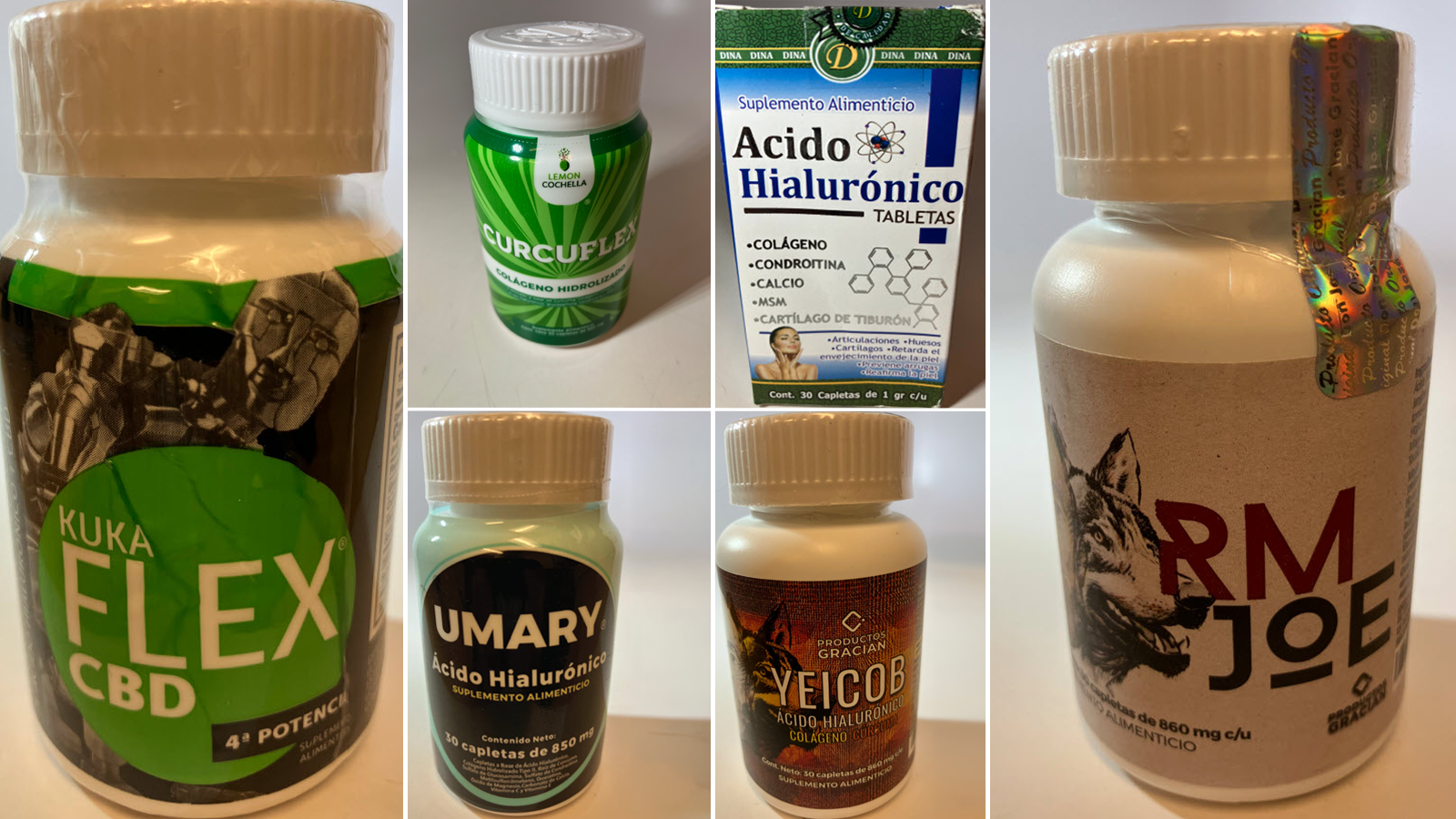
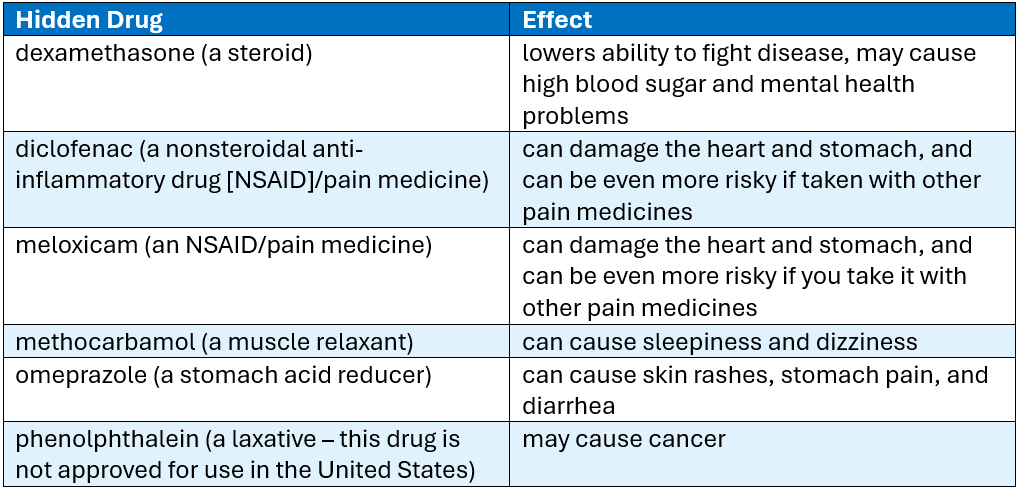
These hidden drugs can be very dangerous if taken unknowingly. They can cause serious health issues that may result in hospitalization.
Here’s what you can do: Before purchasing or taking any supplement, talk to your doctor. If you purchase supplements from a retail store, make sure you read the Drug Facts label to see what other ingredients the product contains. If the hyaluronic acid supplement you are considering contains a hidden drug, do not purchase it. Purchase supplements from a store that has a pharmacy so you can ask to speak to the pharmacist to talk about the product you want to purchase.
If you want to purchase supplements online, talk to your doctor or pharmacist about how to safely order medicines online. Use resources such as the FDA's BeSafeRx campaign. Use the National Association of Boardsof Pharmacy's (NABP) searchable list of accredited digital pharmacies to look up pharmacies to see if they comply with quality assurance criteria. Check to see if a licensed pharmacist is available at any online pharmacy you are considering, which can help determine the pharmacy's legitimacy. If a pharmacy does not require a doctor’s prescription to purchase medicine, the site is likely illegal and unsafe.
Use caution if purchasing products from websites that hold auctions (i.e., eBay) or community marketplaces (i.e., Facebook Marketplace, TikTok). The person/business selling the product is probably not a healthcare provider.
Finally, if you purchased or use any of the products FDA says to avoid, talk to your doctor right away about stopping them safely.

.png)