World Patient Safety Day (September 17, 2026): Safe Care for Life!
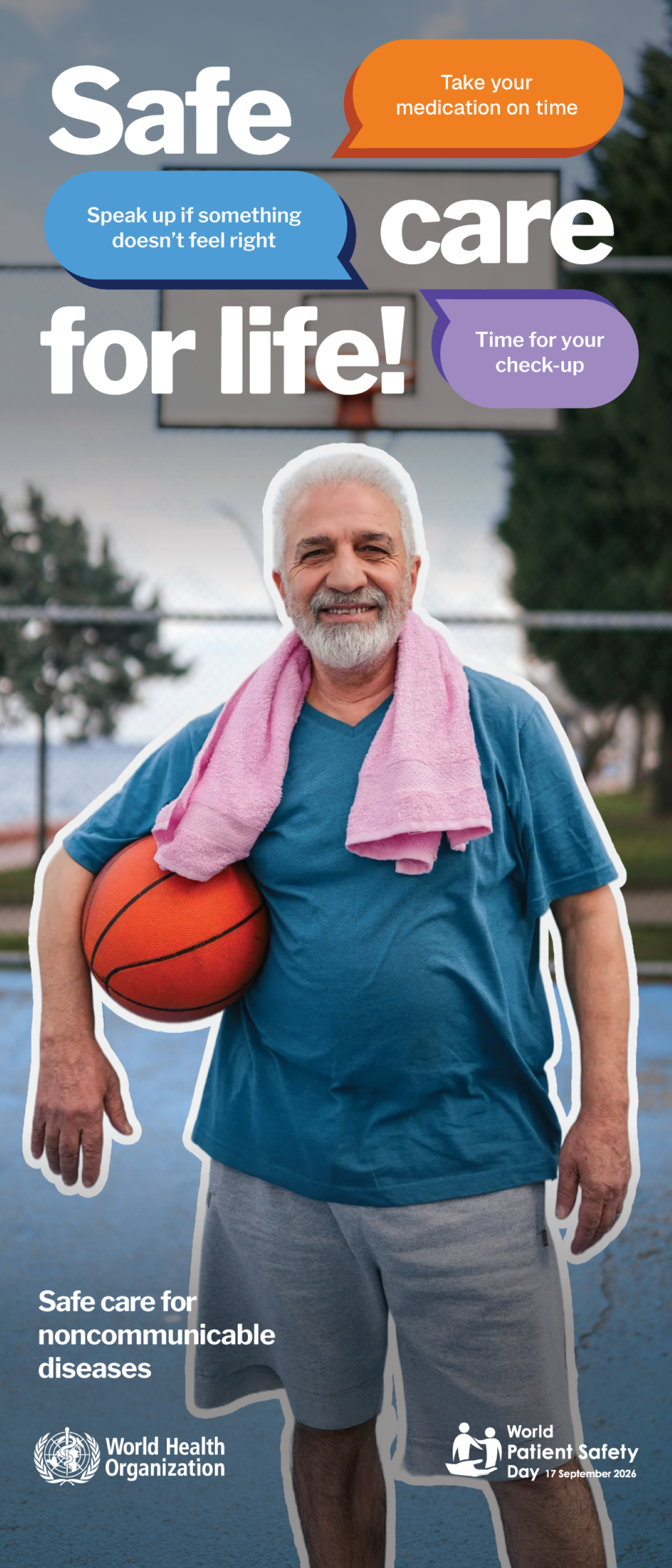
Every year the World Health Organization (WHO) observes World Patient Safety Day and encourages participation from healthcare organizations around the world. This special day falls on September 17 and encourages global unity in reducing patient harm worldwide. The focus of this year’s World Patient Safety Day is safe care for noncommunicable disease or “Safe Care for Life!”
Noncommunicable diseases are health conditions that cannot be spread from person to person. However, once a person is diagnosed with a noncommunicable disease, it will affect them for the rest of their life. For example, cardiovascular diseases (i.e., high blood pressure), cancer, diabetes, and breathing issues (i.e., asthma, chronic obstructive pulmonary disease [COPD]) are noncommunicable diseases. These health conditions can affect all people, of all ages, which makes it a global concern.
There are four objectives for this year’s World Patient Safety Day:
Raiseglobal awareness: Help people learn about safety problems that can happen when caring for people with diseases like diabetes, cancer, heart disease, or lung disease. This includes learning about the disease itself, access to care, and treatment options.
Promote engagement: Help people with long-term diseases and their communities take part in making care safer. They can help find safety problems and work with doctors, healthcare leaders, and government leaders to fix them.
Encourage leaders: Encourage leaders and other decision-makers to include patient safety in laws, policies, plans, and programs for long-term diseases. This means making healthcare systems stronger so patients can get safer care close to home.
Support healthcare workers: Make healthcare safer by finding ways to identify health problems sooner, using medicines safely, and helping patients take part in their care.
The WHO has recommendations for patients aspart of the World Patient Safety Day 2026 campaign.
Stay informed. Stay engaged. Stay safe.
Take steps to stay healthy. Learn what can raise your risk for long-term diseases. Get recommended checkups and screenings. Ask for help early if you notice warning signs.
Know your health condition and risks. Learn about your diagnosis, tests, and treatments. Know what symptoms to watch for that may be a sign of a problem. Follow healthcare instructions, including checking your medicines to help stay safe.
Speak up about your care. Be an active member of your healthcare team. Ask questions, repeat back what you heard, and tell someone if something does not seem safe.
Keep your health information with you. Keep a current list of your symptoms, test results, medicines, and appointments. This is important when you travel or are away from home. You can use patient portals, reminders, or trusted health apps to help track this information.
Use caution when your care changes. Pay close attention when you move from one doctor, clinic, hospital, or care setting to another. Make sure you know your medicines, follow-up visits, and who to call if you feel worse. Follow up on test results because no news does not always mean good news.
Master your self-care. Know how to use your medicines, medical devices, and digital health tools correctly. Know what warning signs to look for and when to seek help.
The WHO has additional recommendations for healthcare professionals, healthcare leaders, policymakers, and civil organizations. Visit the WHO website for more information.
More Safety Articles
Ask Your Pharmacist for an Oral Syringe to Prepare Your Child’s Medicine
An Inquisitive Patient Is a Safe Patient...Be Persistent
If you are hospitalized, nurses will typically give you the medicine your doctor has prescribed. But if the medicine the nurse brings to you doesn’t seem right, it might be that an error has happened. You may be hesitant to speak up about the potential problem. You may believe your doctor and nurse know more about medicine than you do. But in some cases, your instincts may be right, as in the example that follows.
Consumers can often spot a medication error by knowing what to expect. This includes knowing what medicine has been prescribed (for example, the name and dose), what the medicine looks like, and what side effects to expect. The following reported error and great catch shows the importance of knowing about the medicine you take.
Depakote (divalproex sodium) ER is a medicine used to treat seizure disorders, migraine headaches, and certain mental illnesses such as bipolar disorder. The "ER" part of the name stands for "extended release," meaning the contents of the medicine are released slowly, not all at once, after you take the medicine. So, Depakote ER should be taken just once a day.


.png)